

Safe Working in Adverse Weather on Construction Sites
Construction work doesn’t stop when the weather turns but that doesn’t mean safety standards should drop. From heavy rain and high winds to freezing temperatures and extreme heat, adverse weather presents serious risks on site.
With changing weather patterns bringing more frequent extremes, construction businesses must ensure robust planning, training and supervision are in place to protect workers and maintain compliance.
Here’s what you need to know about managing safety in challenging weather conditions.
Why Adverse Weather Is a Serious Risk
Weather can significantly increase the likelihood of:
Slips, trips and falls
Falls from height
Structural instability
Equipment failure
Reduced visibility incidents
Cold stress or heat exhaustion
Manual handling injuries
Under the Health and Safety at Work Act and the Construction (Design and Management) Regulations (CDM), employers have a duty to assess risks and implement suitable control measures including those created by weather conditions.
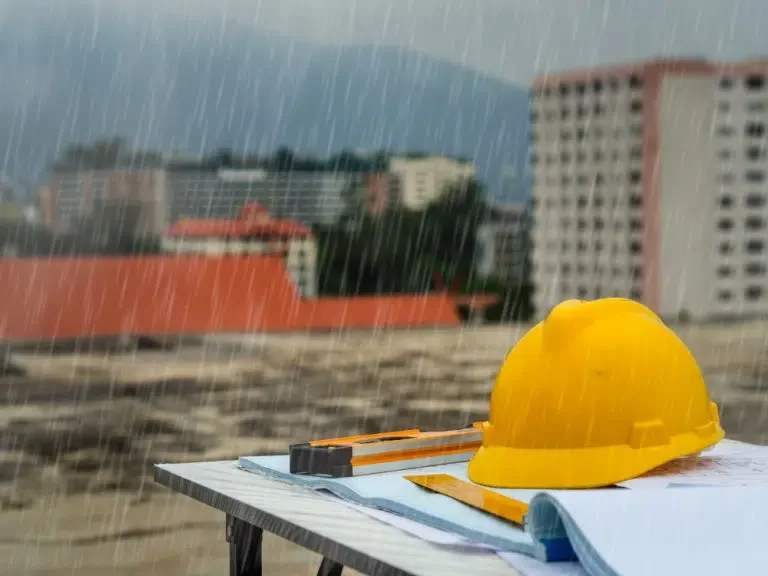
Adverse weather is foreseeable. Failing to plan for it is not defensible.
Working Safely in Different Weather Conditions
Heavy Rain & Flooding
Rain creates slippery surfaces, unstable ground conditions and increased electrical hazards.
Key control measures:
Ensure proper drainage and site housekeeping
Use non-slip access routes and matting
Inspect scaffolding and temporary structures
Protect electrical systems from water ingress
Monitor excavations for collapse risk
Work at height should be reassessed during heavy rainfall, especially when surfaces become slick.
High Winds
Strong winds pose major risks to:
Scaffolding
Tower cranes
Mobile elevated work platforms (MEWPs)
Hoardings and temporary structures
Lifting operations
Control measures include:
Monitoring wind speed using site anemometers
Following manufacturer wind limits for cranes and MEWPs
Securing loose materials
Suspending lifting operations when limits are exceeded
Regular scaffold inspections after high winds
If wind conditions make work unsafe, stopping operations is the correct decision not a failure of productivity.
Cold Weather & Ice
Low temperatures bring risks such as:
Slips due to ice or frost
Reduced dexterity affecting tool handling
Cold stress and hypothermia
Poor concentration
Employers should:
Grit access routes and work areas
Provide suitable PPE including thermal gloves and layered clothing
Allow warm-up breaks
Provide heated welfare facilities
Rotate tasks where possible
Fatigue and cold-related illness can increase incident rates significantly if not managed properly.
Extreme Heat
Heat-related risks are becoming more common across the UK. Prolonged sun exposure can lead to:
Heat exhaustion
Dehydration
Heat stroke
Sunburn and long-term skin damage
Control measures include:
Providing shaded rest areas
Ensuring easy access to drinking water
Adjusting work schedules (earlier starts where possible)
Encouraging regular breaks
Promoting sun protection (SPF, neck protection, breathable PPE)
Supervisors should be trained to recognise the signs of heat stress and respond quickly.
Planning and Risk Assessment
Adverse weather should form part of your:
Site-specific risk assessments
Method statements
Daily briefings
Toolbox talks
Emergency procedures
Weather forecasts should be monitored daily, and dynamic risk assessments conducted when conditions change unexpectedly.
Communication is critical. Workers must feel empowered to raise concerns if conditions become unsafe.
The Role of Training
Training plays a key role in managing weather-related risk. Workers should understand:
When to stop work
How weather affects specific tasks
Safe use of access equipment in different conditions
Emergency response procedures
Supervisors in particular should be confident in making weather-related safety decisions.
When Should Work Stop?
One of the most common questions on construction sites is: “At what point do we stop?”
There is no single temperature or wind speed that automatically shuts down a site. The decision depends on:
The specific activity
Manufacturer guidance
Ground conditions
Exposure levels
Workforce capability
If risks cannot be adequately controlled, work should not continue. Safety must always outweigh programme pressure.
Adverse weather is unavoidable but accidents resulting from poor planning are not.
By combining effective risk assessments, proactive supervision, suitable PPE and a strong safety culture, construction businesses can protect their workforce in all conditions.
Weather will always be unpredictable. Your safety standards shouldn’t be.