

Next Big Thing in Compliance: Material Passports
The construction sector is undergoing a profound shift. As regulations tighten, clients sharpen sustainability expectations, and the market accelerates toward a circular economy, one theme is emerging clearly: material traceability will become a core compliance requirement. And at the centre of this shift is the rise of material passports. Understanding this now is a commercial advantage as soon it will be a non‑negotiable.
A material passport is a digital record of a material or product, documenting key details such as its composition, origin, performance, and end‑of‑life options. Think of it as giving every building component its own unique digital identity. Material passports reduce data loss across decades‑long building lifecycles and make it easier to reuse components, cut waste, and support low‑carbon design. With material passports set to become a standard expectation, it's essential to begin preparing now.
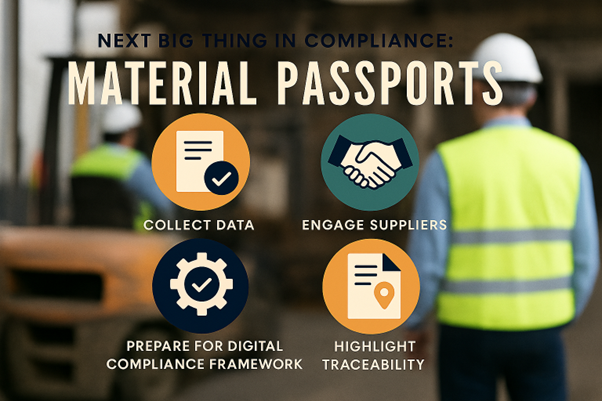
1. Start Collecting Better Material Data Businesses should begin enhancing the quality and completeness of the material data they hold. This includes documenting material composition, origin, and supplier information, along with gathering relevant certifications such as FSC or BES 6001. It’s equally important to record recyclability and end‑of‑life routes for materials, supporting circularity assessments and future recovery planning. Embodied carbon values should also be captured wherever possible, ideally supported by Environmental Product Declarations (EPDs), which provide the third‑party‑verified data increasingly needed for compliance and transparency.
2. Engage Suppliers and Manufacturers It’s essential for businesses to proactively engage with suppliers and manufacturers to understand what sustainability data they can provide. Ask whether they offer EPDs, material passports, or data aligned with circularity indicators. Manufacturers are under growing pressure to supply this information to remain competitive, so establishing these conversations early can help businesses streamline their compliance processes and meet rising client expectations.
3. Prepare for Digital Compliance Frameworks With the EU’s Digital Product Passport framework set to influence the UK market, businesses should ensure they are ready for more rigorous digital reporting. This means organising material data in formats suitable for uploading into digital systems, enabling traceability across value chains, and supporting future compliance platforms. Preparing now will ensure smoother integration as digital traceability becomes industry standard.
4. Highlight Traceability in Your Tenders Finally, businesses should begin emphasising their ability to document materials and support circularity goals in tenders and client proposals. As expectations around transparency, low‑carbon construction, and responsible sourcing rise, demonstrating robust traceability practices may become a decisive factor in securing work.
As material passports rapidly move from an emerging concept to a core compliance expectation, businesses that act now will be best positioned to meet future regulatory and client demands. By improving material data collection, engaging suppliers, preparing for digital reporting frameworks, and showcasing traceability in tenders, companies can stay ahead of the curve and support a more circular, low‑carbon built environment. If you need guidance or hands‑on support implementing any of these steps, Combined Safety Solutions is available to assist with compliance, data management, and sustainability strategy. Get in touch to learn how we can help.